
PGT-A & PGT-M
Optional genetic screening for chromosomal normalcy and gender selection.
Insights Video
PGT-A & PGT-M
How is the PGT-A & PGT-M test performed?
Our PGT-M includes the analysis of chromosomal numerical abnormalities (PGT-A), in addition to the analysis of the specific genetic alteration carried by the patient.
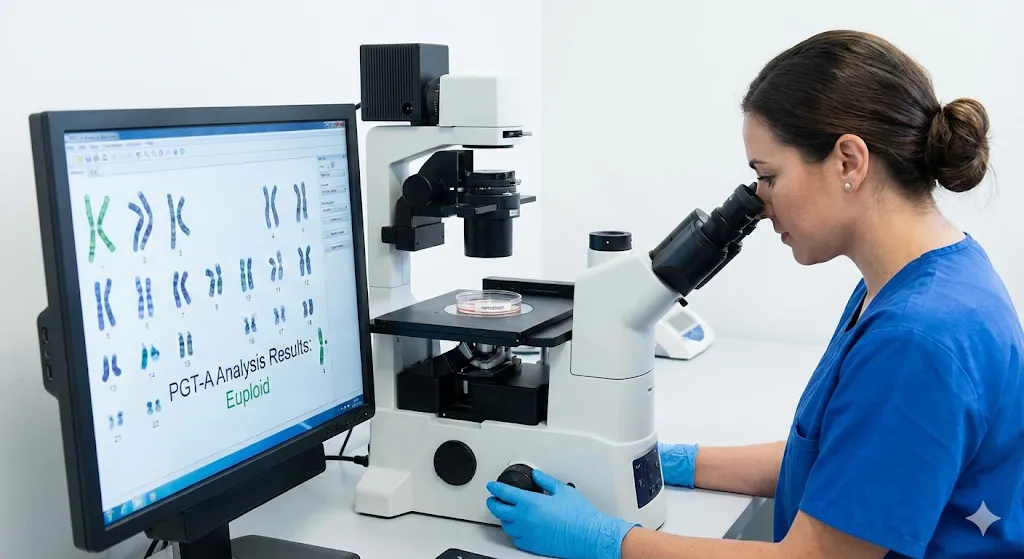
PGT-A Analysis (Aneuploidy Screening) PGT-A uses Next-Generation Sequencing (NGS) to count the number of chromosomes. It ensures the embryo has the correct number (46). This helps prevent miscarriages or conditions like Down syndrome (Trisomy21).
PGT-M Analysis (Mendelian Disorders) If there is a known risk for a specific single-gene disorder (like Cystic Fibrosis or Huntington's Disease), PGT-M is performed. This analysis looks specifically for the mutation identified in Step 2 to see if the embryo inherited the condition.
1.0
The process begins with the collection of patient information, including genetic studies and family history, to identify their needs. With this information, it is possible to determine whether they are candidates for the test or whether an informative study is required to characterize the specific genetic mutation of interest.
2.0
If necessary, an informative study is conducted, which is accompanied by personalized genetic counseling to determine whether patients are candidates for PGT-M.
3.0
The test is carried out in the In Vitro Fertilization (IVF) laboratory by an expert in Assisted Reproduction, then, embryos with the best potential are selected for analysis.
4.0
This technique begins with the biopsy collection without interfering with embryo development on the 3rd, 5th, or 6th day of development, to be analyzed with the help of advanced molecular biology techniques, using the best available technology on the market.
5.0
The genomic analysis is carried out, where the results show which embryos are free of specific genetic disorders (PGT-M) and free of chromosomal aneuploidies (PGT-A).
6.0
Finally, you will have a written report
PGT-M:
to detect specific genetic alterations
PGT-M or Preimplantation Genetic Testing for Mendelian disorders is a technique applied to determine specific (hereditary) genetic abnormalities that may compromise your baby's health.
What is a PGT-M test?
PGT-M is a test to rule out specific hereditary diseases associated with single gene mutations (monogenic) or caused by a chromosomal rearrangement (translocations and inversions).
Genetic alterations occur due to a mutation, insertion, or deletion that affects the proper functioning of genes.
On the other hand, rearrangements occur when a chromosome breaks and the fragmented pieces are added out of place to different chromosomes or within the same chromosome.
This could compromise the well-being of your future baby, predisposing them to develop a syndrome that could be prevented.
Who is PGT-M intended for?
The PGT-M test is usually recommended by specialists in Assisted Reproduction for people who are at risk of passing on a specific genetic disease, particularly those who are within the following groups:
- ✓ Patients with a family history of any hereditary genetic disorders.
- ✓ Patients who have or have had a child with any hereditary genetic disorders.
- ✓ Patients who have been diagnosed as carriers or affected by any hereditary genetic disorder.
- ✓ Patients who belong to the same community or have a history of consanguinity.